Driving is a daily necessity for many people, but safety should never be treated as optional. Modern vehicles come equipped with advanced technologies designed to prevent accidents and reduce injury severity. Yet, many drivers either overlook these features or don’t fully understand their importance.
Below is a clear, practical guide to the car safety features you should never ignore—whether you’re buying a new vehicle or maintaining your current one.
Essential Car Safety Features Overview
Active Safety Features (Prevent Accidents)
Active safety systems help you avoid collisions in the first place. These are especially important in unpredictable driving conditions.
1. Anti-lock Braking System (ABS)
ABS prevents your wheels from locking up during sudden braking.
- Maintains steering control during emergency stops
- Reduces skidding on wet or slippery roads
- Now standard in most modern vehicles
Why it matters: Without ABS, panic braking can cause loss of control, especially at high speeds.
2. Electronic Stability Control (ESC)
ESC automatically adjusts braking and engine power to keep your car stable.
- Detects loss of traction
- Helps prevent rollovers
- Crucial for sharp turns or sudden maneuvers
Real-world impact: ESC has been shown to significantly reduce fatal crashes involving loss of control.
3. Traction Control System (TCS)
This feature works alongside ESC to prevent wheel spin.
- Useful on wet, muddy, or uneven surfaces
- Improves acceleration stability
- Helps maintain grip
Tip: Especially valuable during monsoon seasons or on rural roads.
4. Lane Departure Warning & Lane Keeping Assist
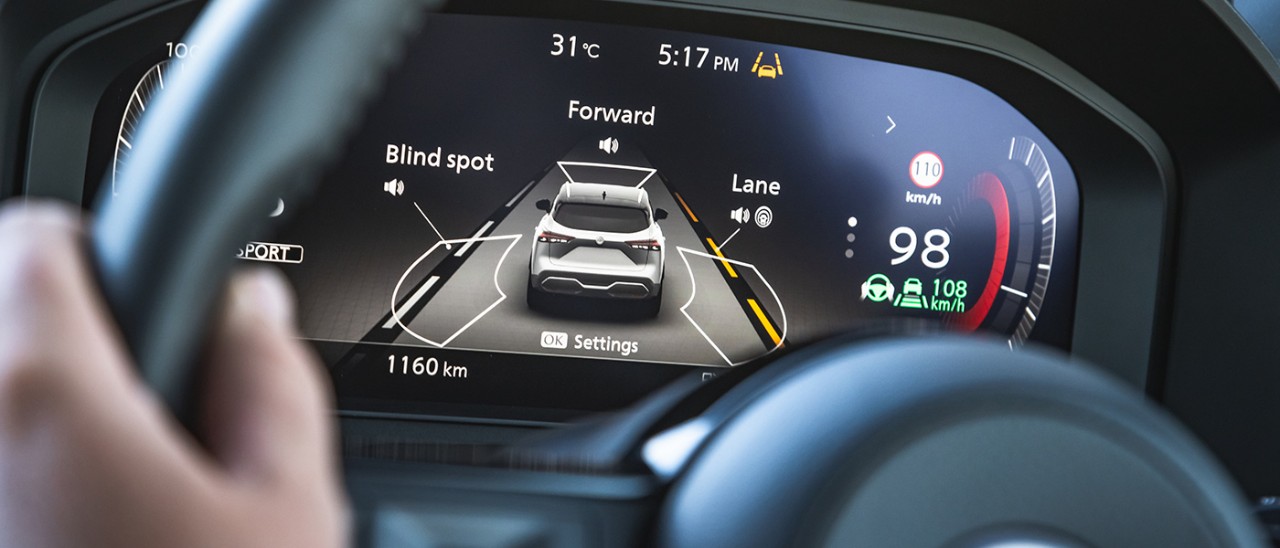
These systems monitor your position on the road.
- Alerts you if you drift out of your lane
- Can gently steer the car back into position
Best for: Long highway drives where fatigue can affect attention.
5. Automatic Emergency Braking (AEB)
AEB detects potential collisions and applies brakes automatically.
- Uses sensors and cameras
- Works with pedestrians, vehicles, and obstacles
- Reduces reaction time delays
Why you shouldn’t ignore it: It can prevent accidents even when you fail to react in time.
Passive Safety Features (Protect During Accidents)
These features don’t prevent crashes but minimize injuries when accidents occur.
6. Airbags
Airbags deploy instantly during a collision to cushion impact.
- Front airbags (driver and passenger)
- Side airbags (protect chest and torso)
- Curtain airbags (protect head during rollovers)
Key point: More airbags = better protection, especially in side-impact crashes.
7. Seat Belts with Pretensioners
Seat belts are your first line of defense.
- Pretensioners tighten the belt instantly during impact
- Keeps occupants securely in place
- Works together with airbags
Reminder: Even with advanced systems, skipping a seat belt is a serious risk.
8. Crumple Zones
Modern cars are designed to absorb impact energy.
- Front and rear zones deform during crashes
- Reduces force transferred to passengers
Result: Lower risk of severe injury.
9. Strong Body Structure
A reinforced frame protects passengers in high-impact crashes.
- High-strength steel or reinforced materials
- Maintains cabin integrity
Important: A strong body prevents collapse during collisions.
Driver Assistance Technologies You Should Value
These features enhance awareness and reduce human error.
10. Blind Spot Monitoring
- Alerts you to vehicles in your blind spot
- Prevents dangerous lane changes
11. Rearview Camera & Parking Sensors
- Improves visibility while reversing
- Helps avoid obstacles, pedestrians, or animals
12. Adaptive Cruise Control
- Maintains safe distance from the car ahead
- Adjusts speed automatically
Useful for: Highway driving and reducing fatigue.
Why These Features Matter More Than You Think
Ignoring safety features isn’t just about missing out on convenience—it can directly affect survival in critical situations.
- Human error causes most accidents
- Safety systems act as a backup when judgment fails
- They reduce both accident likelihood and severity
Investing in a car with these features—or ensuring they’re functional—can make a life-saving difference.
Tips for Buyers and Drivers
Before choosing a car or maintaining one, keep these points in mind:
- Always check safety ratings and crash test results
- Don’t compromise safety for cosmetic features
- Regularly inspect systems like ABS and airbags
- Understand how your car’s safety systems work
Frequently Asked Questions (FAQs)
1. Are basic safety features enough in a car?
Basic features like airbags and ABS are essential, but modern systems like AEB and ESC provide additional protection that can prevent accidents altogether.
2. Do safety features require regular maintenance?
Yes, systems like ABS, sensors, and cameras should be checked periodically to ensure they function correctly.
3. Is it worth paying extra for advanced safety technology?
Absolutely. Advanced safety features significantly reduce accident risk and can save lives.
4. Can safety features replace careful driving?
No. They are assistive tools, not substitutes for responsible driving behavior.
5. How do I know if my car has all safety features working properly?
Dashboard warning lights, service checks, and diagnostic scans can help confirm system health.
6. Are older cars unsafe without these features?
Older cars can still be safe if well-maintained, but they lack modern accident-prevention technologies.
7. Which safety feature is the most important?
Seat belts and airbags remain the most critical, but systems like ESC and AEB are increasingly vital for accident prevention.
Understanding and prioritizing these safety features isn’t just about compliance—it’s about protecting lives. Whether you’re a new driver or experienced behind the wheel, making safety a priority is always the smartest decision.